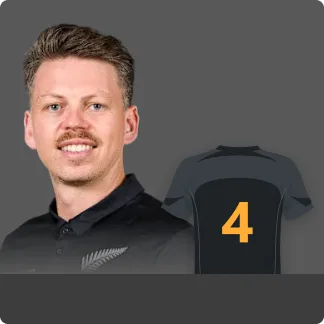
New Zealand has long been known for producing disciplined and intelligent fast bowlers, and among the modern generation, Matt Henry stands out as a cricketer who has carved his own identity through resilience and adaptability.
While early comparisons with Shane Bond brought both excitement and pressure, Henry’s journey has been uniquely his own, defined not just by pace but by persistence in the face of repeated setbacks.
Early Career and Breakthrough
Born in Christchurch, Henry emerged through domestic cricket with strong performances for Canterbury. His ability to bowl at high speeds while maintaining control quickly caught the attention of selectors.
Unlike many young fast bowlers who rely solely on raw pace, Henry combined aggression with tactical awareness, making him a promising prospect for higher levels.
His international breakthrough came in One Day Internationals, where he made an immediate impact. Delivering a standout performance on debut, he showcased his ability to swing the ball and trouble established batsmen.
This early success hinted at a long and fruitful career, but the path ahead would not be entirely smooth
Battling Injuries and Comebacks
One of the defining aspects of Henry’s career has been his struggle with injuries. Fast bowling places immense stress on the body, and Henry experienced this challenge early on.
A significant back injury required surgery, temporarily halting his progress at a crucial stage. However, what separates Henry from many others is his determination to return stronger.
Instead of allowing injuries to derail his career, he used recovery periods to refine his technique and build physical resilience. These efforts paid off as he gradually re-established himself in the squad.
Even after returning, injuries continued to interrupt his rhythm. Yet, each comeback added another layer of maturity to his bowling. Over time, he learned to manage his workload better and adjusted his pace to maintain longevity without sacrificing effectiveness.
Role in the New Zealand Setup
Henry has been an important part of the New Zealand national cricket team across formats, though his impact has been most pronounced in limited-overs cricket. His ability to strike early with the new ball and maintain pressure in the middle overs has made him a valuable asset.
In One Day Internationals, Henry has often been used as a wicket-taking option rather than merely a containing bowler. His knack for breaking partnerships has helped New Zealand control matches during critical phases.
In T20 cricket, his disciplined line and length, combined with subtle variations, allow him to compete effectively even on batting-friendly pitches.
While his appearances in Test cricket have been more selective, he has still delivered noteworthy performances when given the opportunity. His skill set, especially seam movement, makes him a useful option in conditions that favor fast bowlers.
Playing Style and Strengths
What sets Henry apart from many of his contemporaries is his reliance on seam movement rather than just swing. While New Zealand traditionally produces bowlers who excel in swinging conditions, Henry’s ability to extract movement off the pitch gives him an added advantage.
He typically operates at a brisk pace, enough to challenge batsmen without compromising accuracy. His wrist position and seam presentation allow him to generate movement in both directions, making him unpredictable. This skill is particularly effective on pitches that offer even a slight hint of assistance.
Another strength is his adaptability. Over the years, Henry has adjusted his approach based on match situations. Whether it’s attacking with the new ball or focusing on containment during the middle overs, he demonstrates a strong understanding of the game.
Key Performances and Impact
Henry’s career includes several impactful spells that underline his value to the team. From match-winning performances in bilateral series to crucial contributions in tournament settings, he has consistently shown the ability to deliver under pressure.
One of his notable traits is stepping up when opportunities arise. Even when not a regular starter, he has made significant contributions whenever selected. This ability to stay prepared and perform without extended runs in the team speaks volumes about his professionalism.
In franchise cricket as well, Henry has gained experience by playing alongside international stars. Exposure to different conditions and strategies has further enhanced his skill set, making him a more complete bowler.
Evolution Over Time
As Henry’s career has progressed, there has been a visible evolution in his approach. Early in his career, he relied heavily on pace and aggression. While those elements remain, he has added greater control and tactical awareness to his game.
He has also worked on variations, particularly useful in shorter formats. Slower balls, changes in length, and smarter field placements have become integral to his bowling strategy.
These improvements have allowed him to remain competitive even as the demands of modern cricket continue to evolve.
Another significant change has been his focus on fitness and injury prevention. Learning from past setbacks, Henry has taken a more measured approach to workload management, ensuring that he can contribute consistently over longer periods.
Challenges and Competition
Playing for New Zealand means competing in a team known for its strong fast-bowling depth. This competition has both challenged and motivated Henry. With several high-quality bowlers vying for limited spots, maintaining a place in the lineup requires consistent performance.
Henry has managed to stay relevant by delivering when it matters most. His ability to adapt to different roles, whether as a strike bowler or a supporting option, has helped him remain a valuable member of the squad.
Contribution Beyond Numbers
While statistics are an important measure of success, Henry’s contribution goes beyond numbers. His experience and work ethic set an example for younger players entering the team.
By overcoming setbacks and continuously improving, he represents the resilience required to succeed at the highest level.
He also brings balance to the bowling attack. With a mix of pace, movement, and discipline, he complements other bowlers and strengthens the overall unit.